
News (1101)
RSS
The Commission has proposed a 5-point plan to prevent, anticipate and respond to sudden, mass illegal arrivals. Despite a resilient framework in place to manage migration, recent events have put the EU’s borders to the test. The plan will further strengthen the security of EU external borders.

The Commission is gathering feedback on challenges and options for potential future measures to support the effective copyright protection amid market and technology developments. Among other issues, the targeted consultation focuses on the use of copyright-protected content in AI.

New rules will increase patients’ access to medicine and make the EU’s pharmaceutical sector fairer and more competitive. The reform will allow fair access to affordable medicines and cut regulatory burdens on the pharmaceutical industry and strengthen security of supply to prevent shortages.
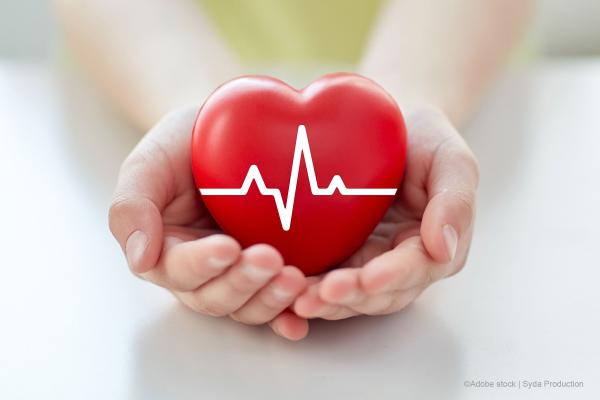
Know your numbers, protect your heart – take a simple check and join Europe’s fight against the silent killer. Today marks the start of the EU’s first-ever Screening Week that encourages people to get tested for cardiovascular diseases and raise awareness around prevention.

The EU has 24 official and more than 60 regional or minority languages. On 26 September we celebrate the richness of our many languages and cultures on the European Day of Languages. Language and cultural institutes, universities and schools will take part in events across the EU. Find out more.

Almost €220 million has been pledged at the launch of the OceanEye International Alliance for the Global Ocean Observing System in New York. The EU and 30 countries, including Canada, are members of the alliance. The funds will go towards reliable ocean observation around the world.
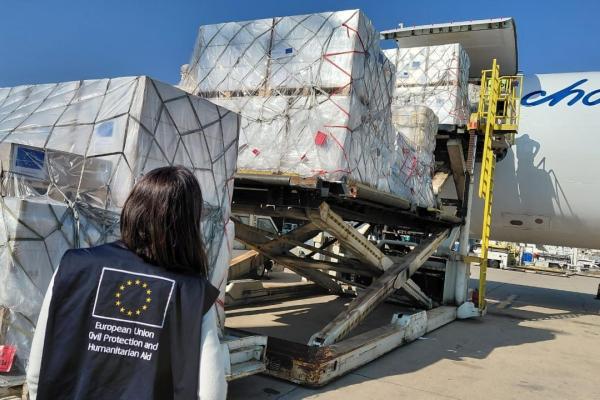
The first flagship early recovery projects under the EU-led Team Gaza Initiative have been launched during the UN General Assembly High-Level Week in New York. The projects, worth a total of €43 million, will help restore essential water and solid waste management services for people in Gaza.

The rapid growth in data centres puts pressure on electricity grids and the use of natural resources, as well as contributes to increased carbon emissions. To limit these impacts, the European Commission has proposed a common rating scheme for data centres aimed at increasing energy transparency.

In the face of growing concerns about the risks children and teenagers face when using online platforms, the EU has proposed a new KIDS Act. This will introduce a gradual uptake of social media for children in the EU, notably delaying access to social media until the age of 13.
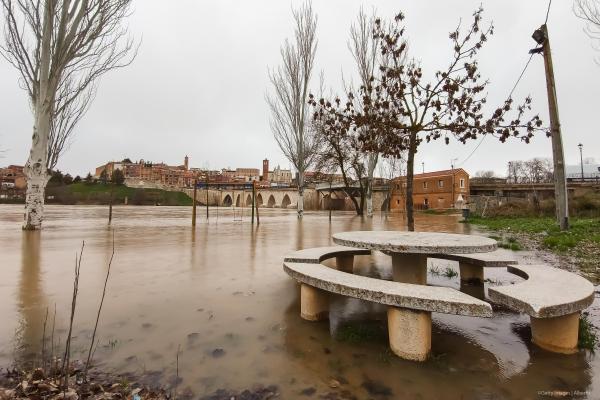
The European Commission has proposed to mobilise €489 million to help Portugal, Spain, Italy and Malta recover from severe storms and flooding in January and February 2026. The funding will support recovery operations to rebuild transport infrastructure and reestablish essential services.

The European Parliament has approved a major reform of the EU Customs Code that introduces stricter rules for e-commerce and establishes a new customs authority in Lille. By November 2026 a new handling fee for goods ordered directly from non-EU countries will come into effect.
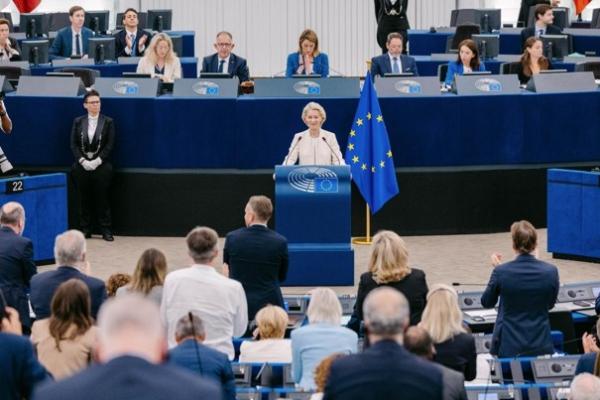
In her 2026 State of the Union speech, European Commission President Ursula von der Leyen shared the key priorities and flagship projects for the EU in the year to come. These include competitiveness and jobs, security and defence, climate resilience, social inclusion and democracy and rule of law.
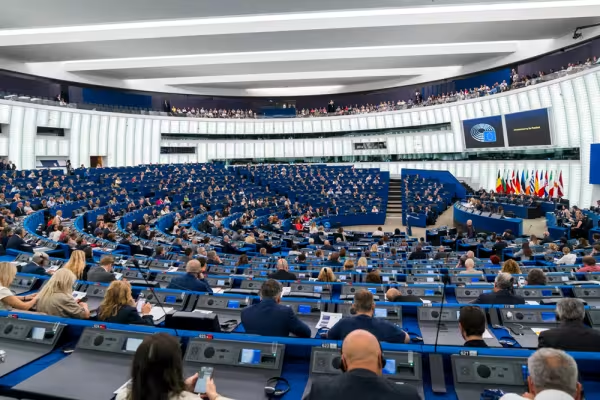
Members of the European Parliament have warned that foreign interference threats are an attack on the “very essence of the European project”, with citizens as primary victims. They adopted a report proposing practical recommendations on how the EU can do more to defend its democratic institutions.

The Commission has adopted proposals that will guarantee social rights for workers, regardless of where they choose to live in the EU. Workers will be able to have their professional skills understood everywhere in the EU and prove and claim their social security and health insurance rights.
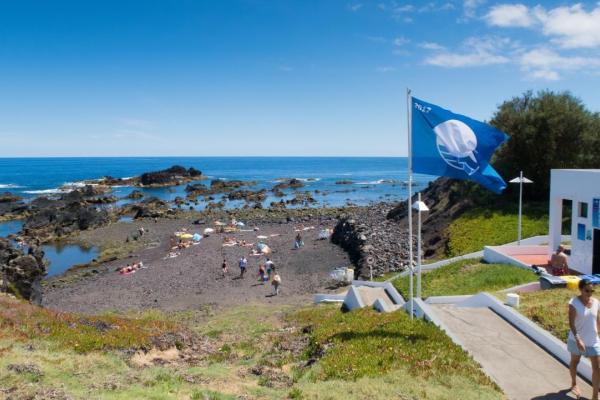
A new Commission strategy will ensure that the EU’s outermost regions can fully realise their potential, with stronger support, greater resilience and fairer opportunities for their people. From Martinique to Madeira, the EU’s outermost regions play a key geostrategic role in today’s changing world.

New EU rules have been proposed to support EU countries and cities address the affordable housing crisis, particularly housing used for purposes other than primary residence. The rules give public authorities the legal certainty when they choose to act, based on local specificities, within EU law.

Throughout September and October, the European Heritage Days 2026 invites people across Europe, under the theme “heritage at risk: revive, resist, reimagine” to discover how communities are protecting, restoring and reimagining their heritage for the future. Find out more.

The Commission has proposed a new European innovation act to help Europe's most innovative ideas be developed, financed and scaled up in Europe. The proposal will help innovative companies access financing and establish a common approach for research and development procurement.

Although greenhouse gas emissions reached a record high in 2025, six of the 16 major emitters, contributing over 1% of global emissions, achieved reductions, including Australia, Brazil and Japan. The EU cut its greenhouse gas emissions by 0.2% relative to 2024, while US emissions rose by +2.2%.

Europol supported a Spanish-led investigation that dismantled one of the largest criminal networks smuggling cannabis, synthetic drugs, migrants, weapons, and fugitives across the Western Mediterranean. The operation led to the arrest of 78 suspects and the seizure of 18 high-speed vessels.